
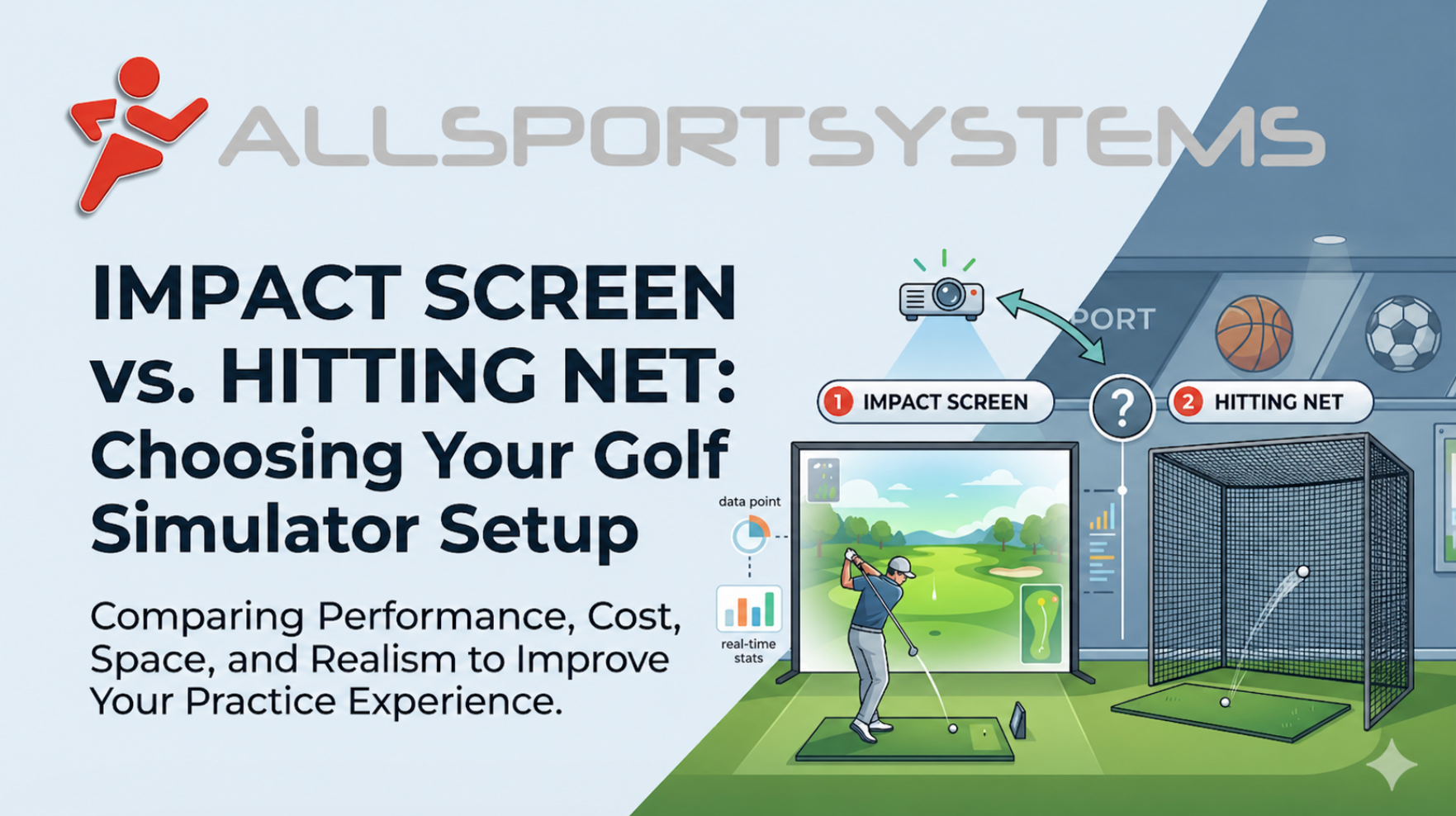
Choosing between a simulator impact screen and a simulator hitting net for golf simulators can significantly affect your practice experience. Discover which option suits your gameplay best!
Understanding Impact Screens
Impact screens are specialized components used in high end golf simulators that allow golfers to hit real golf balls while simultaneously displaying a virtual golf course. These simulator screens are typically made from durable materials like polyester or nylon, designed to withstand the high-speed impact of a golf ball. The screen not only stops the ball but also captures critical data such as speed, spin, and trajectory, which is then used by the simulator software to provide accurate feedback.
The integration of an impact screen with a golf simulator creates an immersive experience. High-definition projectors are often used to display realistic graphics of the golf course directly onto the screen, making players feel as though they are actually on the green. This visual feedback is crucial for golfers looking to improve their game, as it offers immediate insights into their swing and shot performance. Check out our Full Golf Simulator Packages with Screens! Also be sure to check out our Golf Simulator Bays with Screens!
Another essential aspect of impact screens is their ability to minimize noise and vibration. High-quality golf hitting screens are designed to absorb the energy of the golf ball, reducing the loud "thud" that can be disruptive in indoor settings. This feature is particularly beneficial for people who practice in shared living spaces or commercial environments where noise control is essential.

Advantages of Using Impact Screens
One of the most significant advantages of using an impact screen is the immersive experience it provides. The combination of real-time data capture and high-definition visual feedback allows golfers to practice in a setting that closely mimics an actual golf course. This level of realism can make practice sessions more engaging and productive, helping golfers to refine their skills more effectively.
Another key advantage is the ability to analyze detailed metrics. Impact screens are often paired with advanced tracking systems that measure various aspects of the golf swing, such as ball speed, launch angle, and spin rate. This data is invaluable for golfers looking to make precise adjustments to their technique. By reviewing these metrics, players can identify areas of improvement and develop targeted practice routines.
Durability is also a notable benefit. Durable golf impact screens are designed to withstand thousands of high-speed impacts without showing signs of wear and tear. This longevity makes them a cost-effective investment for serious golfers who practice regularly. Additionally, the materials used in these screens are often resistant to UV light and moisture, making them suitable for both indoor and outdoor use.
Disadvantages of Impact Screens
Despite their many benefits, impact screens come with some drawbacks. One of the primary disadvantages is the cost. High-quality impact screens can be quite expensive, particularly when paired with advanced projector systems and tracking technology. This initial investment can be a significant barrier for casual golfers or those on a tight budget.
Another potential downside is the setup complexity. Installing an impact screen requires adequate space, precise measurements, and sometimes professional assistance. Ensuring that the screen is properly tensioned and aligned with the projector can be a time-consuming process. Additionally, maintaining the screen, such as cleaning and occasional repairs, can add to the overall effort required to keep the system in optimal condition. If space is a concern, consider our Micro Bay enclosure that comes with an impact screen.
An Introduction to the Micro Bay Enclosure!
Click Here to Read All About the Micro Bay Enclosure!
Finally, impact screens can suffer from wear and tear over time, especially if used frequently. While they are designed to be durable, constant high-speed impacts can eventually lead to small tears or stretches in the material. These imperfections can affect the accuracy of the data captured and the quality of the projected image, necessitating periodic replacements or repairs. Keep in mind, we offer replaceable golf simulator impact screen strips. Expand the lifespan of your screen today!
 This Replaceable Hitting Strip is a Golf Sim Must Have!
Exploring Hitting Nets
Golf sim hitting nets are another popular option for golfers looking to practice their swings at home or in other confined spaces. Unlike impact screens, hitting nets do not display a virtual golf course or provide detailed shot data. Instead, they serve as a barrier that stops the golf ball after it is hit, allowing golfers to focus solely on their swing mechanics.
The simplicity of hitting nets is one of their most appealing features. They are generally easy to set up and require minimal space, making them an ideal choice for people with limited room. Most hitting nets are portable and can be assembled or disassembled quickly, allowing for flexible practice sessions. This portability is particularly beneficial for golfers who want to practice in different locations, such as their backyard, garage, or basement.
Hitting nets are also relatively affordable compared to impact screens. They come in various sizes and price ranges, making it easier for golfers to find an option that fits their budget. This affordability makes hitting nets an attractive choice for beginners or casual golfers who are not ready to invest in a more advanced simulator setup.

Benefits of Hitting Nets for Golf Simulators
One of the primary benefits of hitting nets is their simplicity and ease of use. Setting up a hitting net typically requires only a few minutes, and they can be used in a wide range of settings. This convenience allows golfers to practice their swings without the need for complex installations or specialized equipment.
Another significant advantage is the cost-effectiveness. Hitting nets are generally much cheaper than impact screens, making them accessible to a broader audience. This affordability allows golfers to allocate their budget towards other training aids or accessories, such as swing analyzers or practice mats, enhancing their overall practice experience.
Hitting nets also offer a high degree of versatility. They can be used with various types of golf balls, including foam or plastic practice balls, reducing the risk of damage to property or injury. This versatility makes hitting nets a safe and practical option for indoor practice, especially in homes with limited space. Additionally, many hitting nets are designed to be weather-resistant, allowing for outdoor use in various conditions. Another safe netting for golf simulator is the SkyGuard.
An Introduction to the SkyGuard Top and Side Safety Netting
Click Here to Read All About the SkyGuard Safety Netting for Golf Simulators!
Limitations of Hitting Nets
While hitting nets offer several advantages, they also come with some limitations. One of the main drawbacks is the lack of visual feedback. Unlike impact screens, hitting nets do not display a virtual golf course or provide detailed shot data. This absence of visual and analytical feedback can make it challenging for golfers to gauge the accuracy and quality of their shots.
Another limitation is the potential for wear and tear. Although hitting nets are designed to withstand repeated impacts, they are generally less durable than impact screens. Over time, the netting material can develop holes or fray, reducing its effectiveness and requiring replacement. This wear and tear can be particularly pronounced if the net is used with real golf balls and high swing speeds.
Space requirements can also be a limitation for some users. While hitting nets are generally compact, they still require a certain amount of room to be used safely. Golfers need to ensure that there is enough clearance around the net to prevent damage to surrounding property or injury to bystanders. This spatial consideration can be a constraint for individuals with very limited practice areas.
Comparing Performance: Impact Screens vs. Hitting Nets
When comparing the performance of impact screens and hitting nets, several factors come into play. One of the most significant differences is the level of feedback provided. Impact screens, when used with advanced simulators, offer detailed metrics and visual feedback that can help golfers analyze and improve their swings. This data-driven approach can be incredibly beneficial for serious golfers looking to make precise adjustments to their technique.
On the other hand, hitting nets focus primarily on the mechanics of the swing without providing visual or analytical feedback. This simplicity can be both an advantage and a disadvantage. For golfers who prefer a straightforward practice session without the distraction of data and graphics, hitting nets can be an excellent choice. However, for those looking to make data-driven improvements, the lack of feedback can be a significant drawback. Keep in mind that feedback can be seen on an additional screen as long as you are using a golf launch monitor. But an impact screen brings an immersive indoor golf experience.
Durability is another critical factor to consider. High-quality impact screens are designed to withstand thousands of impacts, making them a long-term investment. In contrast, hitting nets, while generally durable, may require more frequent replacement due to wear and tear. This difference in longevity can influence the overall cost-effectiveness of each option over time.
Factors to Consider When Choosing Between Impact Screens and Hitting Nets
When deciding between an impact screen and a hitting net, several factors should be taken into account. One of the most important considerations is budget. Impact screens, particularly those with advanced tracking systems and high-definition projectors, can be quite expensive. In contrast, hitting nets are generally more affordable, making them accessible to a broader range of golfers.
Space is another crucial factor. Impact screens require a larger area for proper installation and use, including space for the golf sim projector and adequate room for the golfer to swing. Hitting nets, while still requiring some space, are generally more compact and portable, making them suitable for smaller practice areas.
The level of feedback desired is also an essential consideration. Impact screens provide detailed metrics and visual feedback, making them ideal for golfers looking to make data-driven improvements. Hitting nets, on the other hand, focus on the mechanics of the swing without providing visual or analytical feedback. Golfers need to decide whether they prefer a more immersive, data-driven experience or a straightforward, mechanics-focused practice session.
Conclusion and Recommendations
In conclusion, both impact screens and hitting nets offer unique advantages and limitations for golfers looking to practice at home. Impact screens provide an immersive, data-driven experience with detailed metrics and visual feedback, making them ideal for serious golfers looking to make precise adjustments to their technique. However, they come with a higher cost and require more space and setup complexity.
Hitting nets, on the other hand, offer a simpler, more affordable option that focuses on the mechanics of the swing. They are easy to set up, portable, and suitable for smaller practice areas. However, they lack the visual and analytical feedback provided by impact screens, which can be a drawback for golfers looking to make data-driven improvements.
Ultimately, the choice between an impact screen and a hitting net will depend on individual preferences, budget, and practice goals. For golfers looking for a comprehensive, immersive practice experience with detailed feedback, an impact screen is likely the best choice. For those who prefer a straightforward, cost-effective option that focuses on swing mechanics, a hitting net may be more suitable. By carefully considering these factors, golfers can choose the option that best meets their needs and enhances their practice sessions.
Click Here to Read About the Best Golf Simulator Accessories!
